What the state counted
4.7m
accounts removed or restricted by mid-December 2025
Not a count of children who left the feed. (eSafety Commissioner, 2026)
10 December 2025 · Social Media Minimum Age
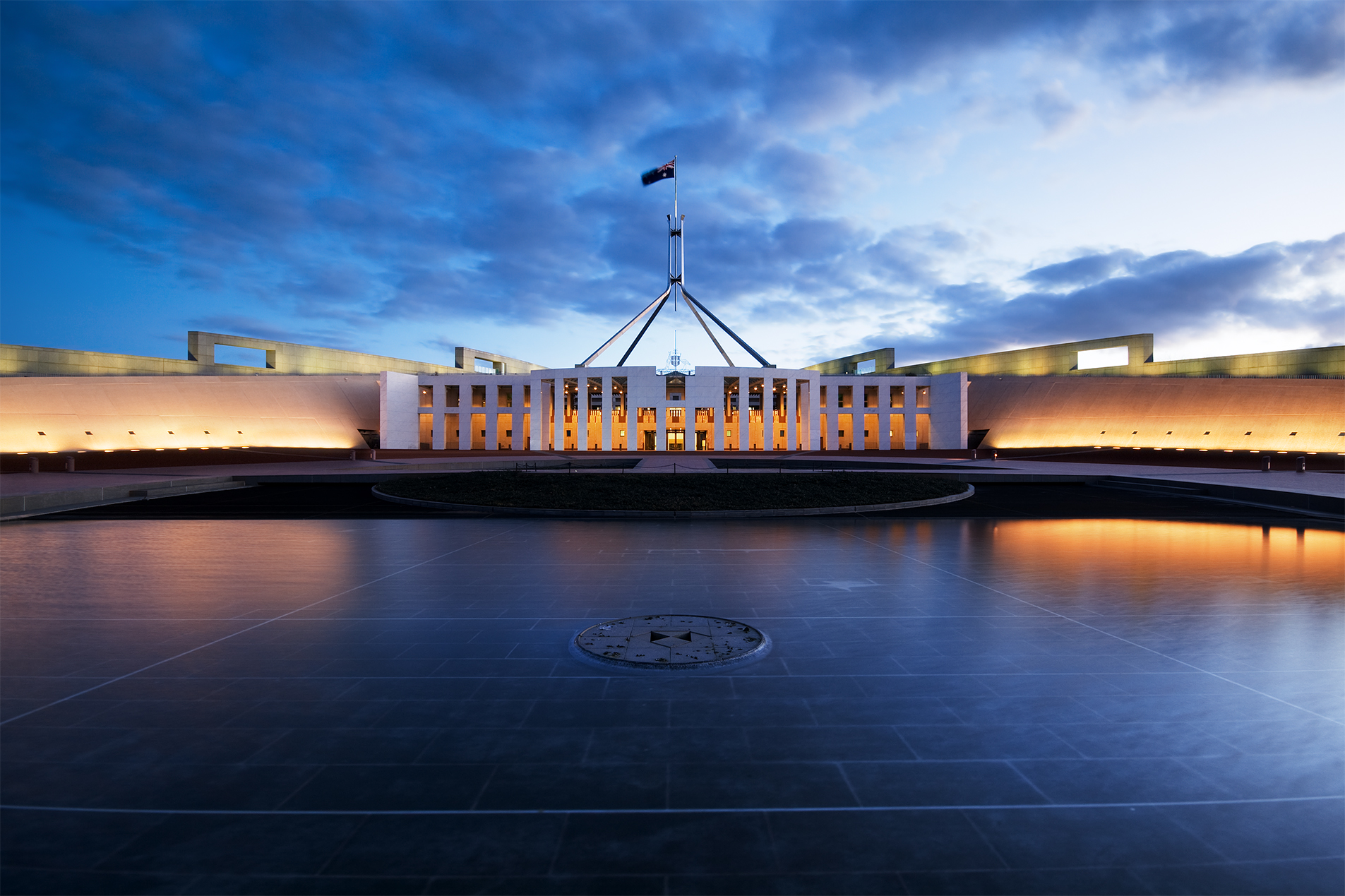
Parliament House, Canberra
01 / The media text
“It’s not a ban, it’s a delay to having accounts.”
Tinted citations with an arrow are links. Click one to open the reference; then use Back to return to this sentence.
In March 2026 Australia’s eSafety Commissioner reported that platforms had blocked or restricted more than 300,000 extra under-16 accounts, on top of 4.7 million already actioned by mid-December 2025. Five services — Facebook, Instagram, Snapchat, TikTok and YouTube — moved into enforcement investigations (eSafety Commissioner, 2026).
The campaign hub’s sentence is the media text (eSafety Commissioner, n.d.). The Social Media Minimum Age obligation, in force since 10 December 2025, is the issue it is built to naturalise. Calling it a delay rather than a ban is hegemonic work: postponed access is offered as common sense — recovered childhood, parents’ peace of mind — not as a contest over who may speak (Hall, 1980).
02 / Two measures of one delay
What the state counted
4.7m
accounts removed or restricted by mid-December 2025
Not a count of children who left the feed. (eSafety Commissioner, 2026)
What under-16s reported
85 / 100
still using a covered platform about three months on. Rounded from n = 408. (Barnes et al., 2026)
Deletions are not the same as leaving.
03 / Encoding


The national campaign For the good of their wellbeing (19 October 2025 to 11 April 2026) encoded a preferred meaning: postponing a logged-in feed protects childhood, and that protection is “parents’ peace of mind” — the phrase attached to the November 2024 amendment of the Online Safety Act (Fardouly, 2025).
Flew and Waisbord (2015) argue that nation-states remain the primary site of media legislation even as platforms globalise. Read as a circuit of culture — conception, production, distribution, reception — (du Gay et al., 1997), Australia used that sovereignty as cultural protectionism: a harms-based age floor, tightened on 25 March 2026 to logged-in and recommender features (eSafety Commissioner, 2026). Barnett (2010) treats media policy as a public-interest trade of access against other social goods; here access is delayed for a vulnerable group.
04 / Distribution
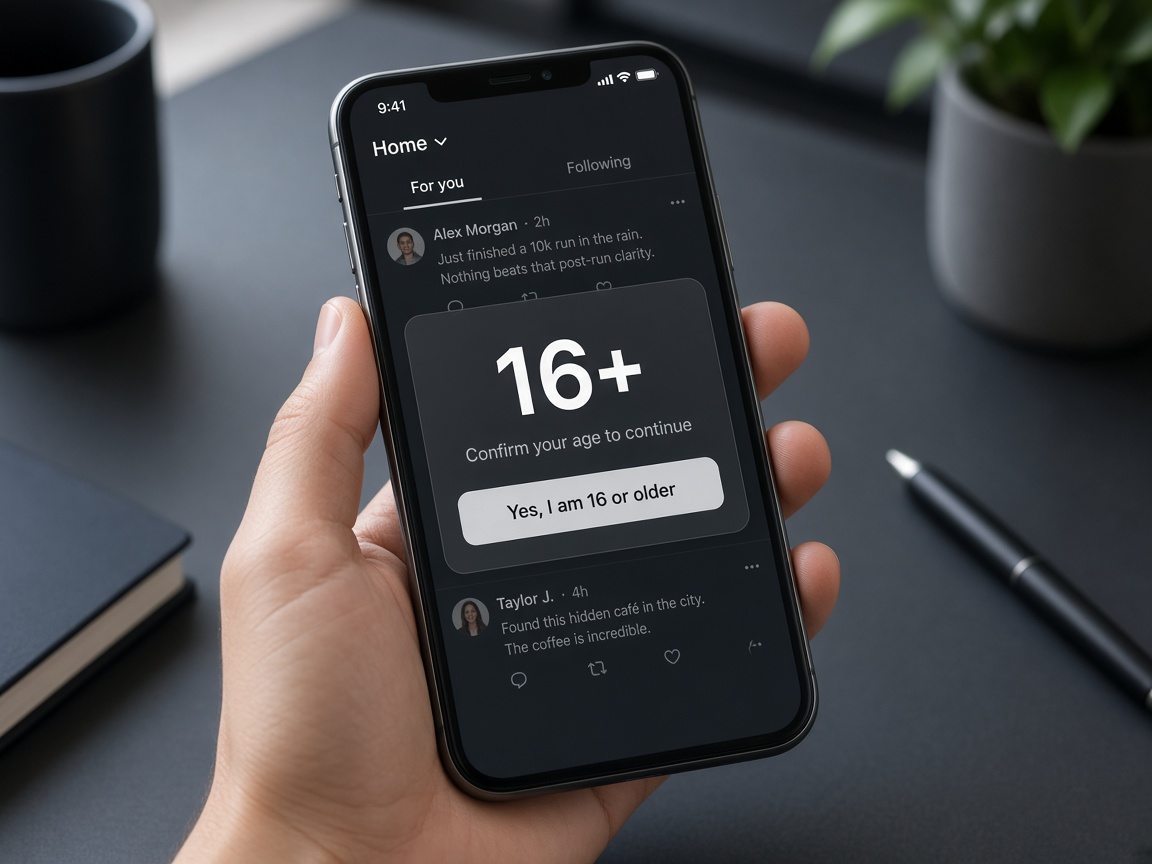
This is co-regulation, not a broadcast licence. The duty is on platforms to take “reasonable steps” to stop Australians under 16 holding accounts. Children and parents are not fined; a non-compliant provider can face civil penalties in the tens of millions of dollars (Department of Infrastructure, 2025).
Age assurance became the distribution mechanism. The Age Assurance Technology Trial claimed such systems could be done privately and robustly (Age Check Certification Scheme, 2025). Livingstone et al. (2024) warn that poorly designed gating can push children to misrepresent themselves. QUT’s explainer flags the same trade-off with privacy and non-discrimination (QUT Digital Media Research Centre, 2025). eSafety later observed retries until a check passed, weak parental reporting, and common self-declaration (eSafety Commissioner, 2026).
The policy circuit
click to see explanation.
Conception
Parliament, eSafety and the campaign define the delay as childhood recovered. A logged-in feed is written as something that can steal that childhood — and a postponement as something that can return it.
Who the delay actually covers
Inside · enforcement investigations, March 2026
Outside · still open
The March 2026 Rules tried to name logged-in and recommender features. These nine names are the negotiated reading: a delay that does not cover the whole social internet.
05 / Reception
Click a card. The paragraph below switches to that reading.
Hall’s (1980) encoding/decoding model stays useful if it stays attached to this policy.
The campaign’s dominant reading invites parents into the preferred meaning: a delay that restores childhood and peace of mind, offered as common sense rather than as a fight over who may speak.
A negotiated reading uses what the Rules still exclude.
Discord, Roblox, WhatsApp and Steam remain open as social infrastructure.
The delay is real for the services now under investigation, and incomplete for the rest of young people’s internet.
That gap is not a footnote: it is how the delay is actually lived.
An oppositional reading is already empirical.
Barnes et al. (2026) followed 408 adolescents: more than 85% of under-16s still used covered platforms, often through their own accounts, with fake accounts and private browsers as workarounds.
A regression discontinuity at age 16 was not significant.
Fardouly (2025) had predicted mixed effects: less exposure to some harms, but lost support networks and displacement onto less-regulated services.
06 / Close
Accounts were removed at industrial scale, and some educators told eSafety that students seemed relieved to be off the apps. A parent pulse survey in the same update found own-account rates falling from 49.7% to 31.3% — a drop, not an emptying of the feed (eSafety Commissioner, 2026).
The delay is working as a meaning, not yet as a sealed gate. Investigations were aimed at enforcement decisions by mid-2026, and an independent review must start within two years of commencement. What would keep it moving is a shift from counting deleted accounts to governing recommenders, endless scroll, and the logged-in funnel the March 2026 rule tried to name (Wihbey, 2025). Until platforms are treated as producers of harm rather than reluctant gatekeepers, many young users will still decode around the delay.
Delay: Australia’s Social Media Minimum Age
PSB5050MP CW1 · Media Policy and Regulation
Wang Fanxi · Student ID 0334RIDD
Analytical body: 690 words
Last edited 20 September 2026
You are in the reference list.

Student profile
Media and Communication · Coventry University